
Blog / Biophilic Design: Bringing Nature Into Your Indian Home
Biophilic Design: Bringing Nature Into Your Indian Home
17 Dec 2025 · Ushas Velandy, Director, FWD
Biophilic design is not about filling your home with plants — it is about designing spaces that connect people to natural elements in ways that improve daily wellbeing.
Biophilic design draws on well-established research showing that humans perform and feel better in environments with natural light, natural materials, access to views of nature, and good ventilation. For Indian homes — many of which are urban apartments in dense neighbourhoods — this is not about creating a botanical garden inside your living room. It is about making deliberate choices at the design stage that favour natural elements over synthetic alternatives in ways that improve how the space feels to live in every day.
Natural light is the single most impactful biophilic element available to any homeowner. A room that receives generous natural daylight through well-oriented windows will feel more alive, more calming, and more connected to the outside environment than any amount of decoration can compensate for. Before adding any biophilic element, audit what is blocking your natural light — heavy fixed curtains on non-private windows, built-in elements that obstruct lower window areas, or false ceilings that reduce the perceived sky connection.
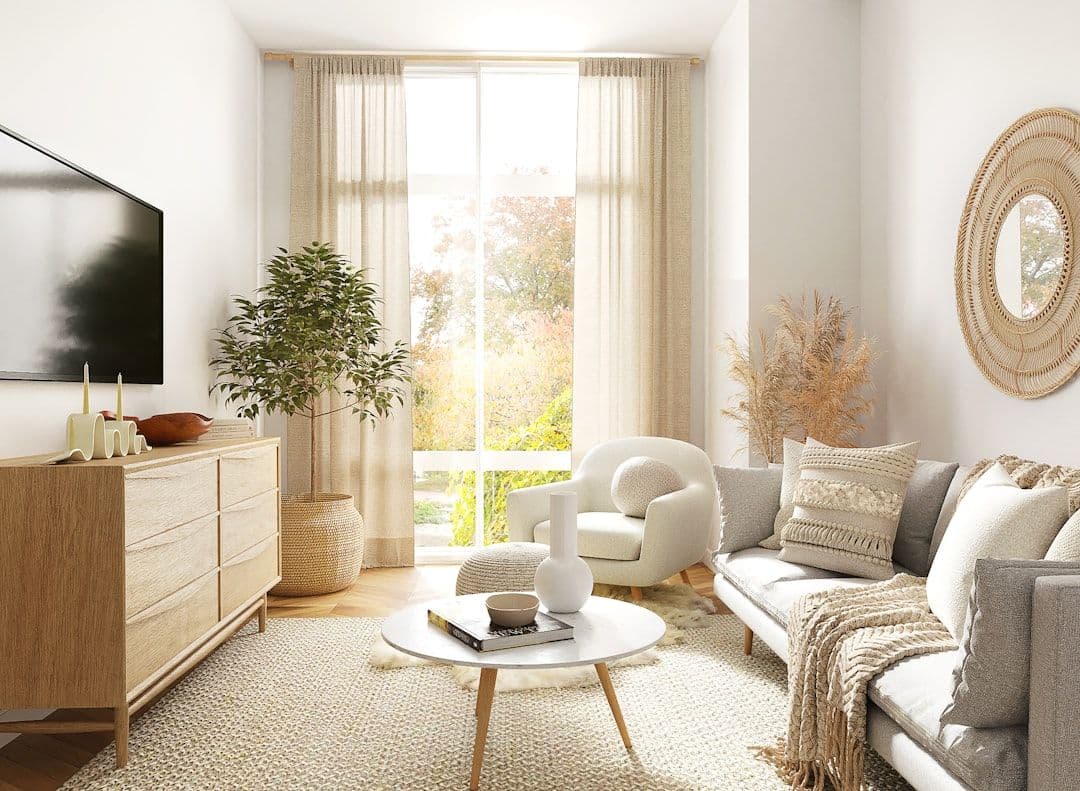
Natural materials — timber, stone, rattan, jute, and linen — bring tactile connection to nature even in dense urban apartments without requiring access to outdoor space. These materials do not need to be expensive to be effective. Natural-finish plywood shelving, a jute area rug, and linen curtains cost comparably to their synthetic alternatives while contributing significantly to how a room smells, sounds, and feels underhand and underfoot — which is where biophilic experience actually registers.
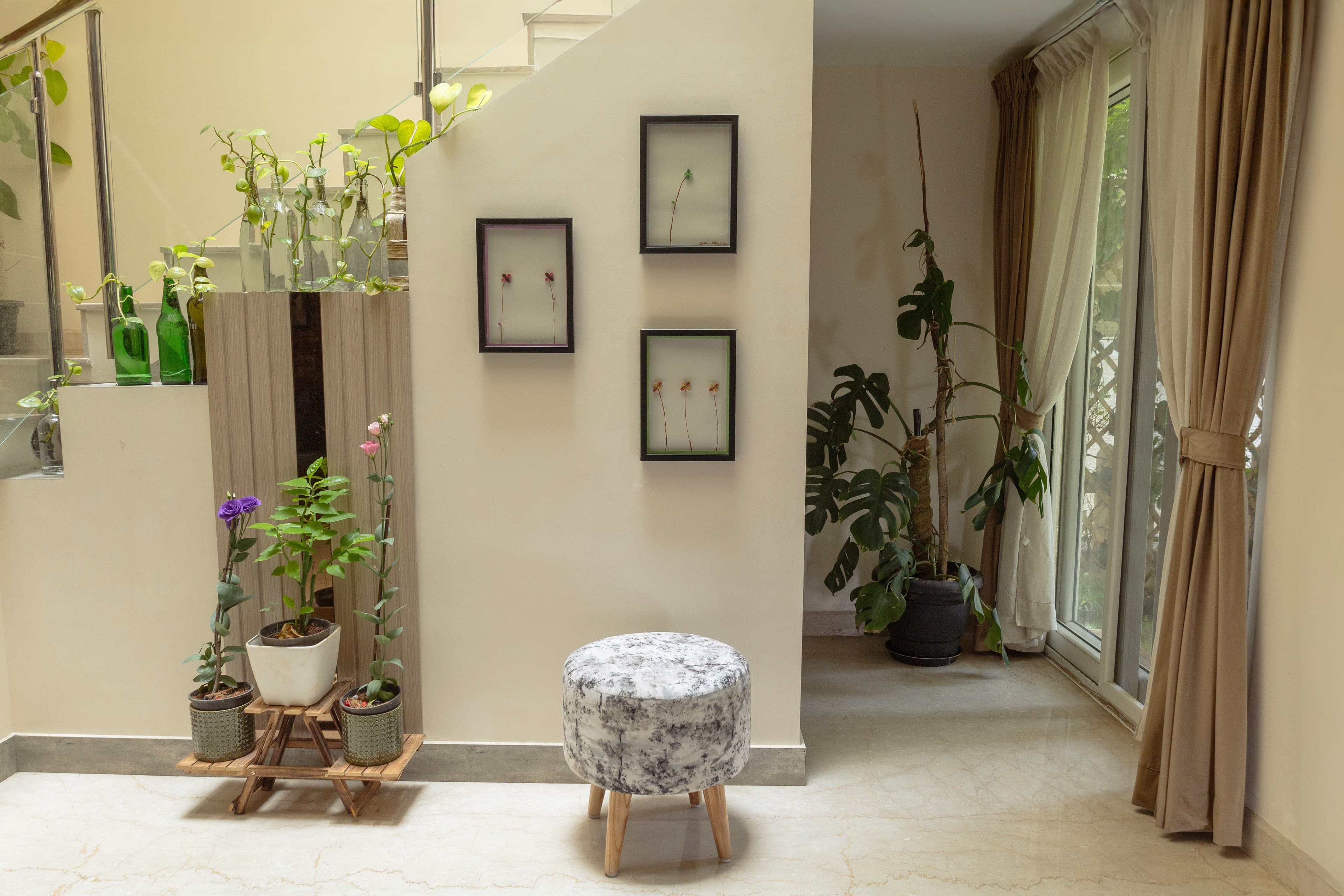
Views of greenery — even partial or managed ones — have measurable effects on stress and attention restoration. If your apartment has a balcony, treat its planting as part of the interior design rather than an afterthought. Frame the balcony view from the primary seating position in the living room. In apartments without balconies, a well-maintained planting shelf at window level creates a visual connection to growing things that is worth the maintenance investment.
Water features, textured surfaces that recall geological formations, and materials with natural variation — handmade tiles, hand-trowelled plaster, live-edge timber — all engage biophilic perception in ways that uniform synthetic finishes do not. These do not need to be large to be effective. A single handmade ceramic bowl, a rough-textured stone side table, or a wall section treated with natural clay plaster adds biophilic quality to a room without requiring a full redesign.
Indoor plants work best when the selection is matched to the actual light conditions of the room and the household's maintenance capacity. A fiddle-leaf fig requires bright indirect light and consistent watering; a pothos or snake plant survives lower-light conditions and irregular watering. An honest assessment of how much attention you will reliably give to plants determines what species makes sense — not what looks best in photographs.
Biophilic design is most effective when it is integrated into the brief from the start rather than applied decoratively at the end of a project. If natural light is a priority, it should inform window treatment choices, false ceiling heights, and the placement of reflective surfaces. If natural materials are a priority, they should appear in the early material palette discussions. A brief that includes biophilic intent from the first conversation produces a more cohesive and genuinely natural-feeling result.
Need a tailored design roadmap?
Speak with our team to turn these ideas into a practical plan for your home.